
Why Buying Ammunition in Large Quantities Saves You More Than Money
Stock Up Smart: Your Friendly Guide to Buying Bulk Ammo
Bulk ammo is a high-volume purchase of factory-new or remanufactured cartridges, packaged in large quantities such as 6.8 SPC Ammo for Sale 500 or 1,000 rounds, rather than standard retail boxes of 20 or 50. This format works by reducing the per-round cost through streamlined packaging and logistics, while maintaining the same ballistic performance as individually boxed ammunition. **The primary advantage is significant cost savings** per round, which allows for extended range sessions or consistent defensive practice without frequent repurchasing. To use it effectively, simply store the rounds in a cool, dry ammo can and load magazines as needed, ensuring the lot number is consistent for uniform accuracy across your session.
Why Buying Ammunition in Large Quantities Saves You More Than Money
When you commit to bulk ammo purchases, you’re not just trimming per-round costs—you’re buying back your range time. I remember the frustration of rationing boxes, calculating every magazine just to stretch a paycheck. With a single large order, that mental math vanishes. You shoot freely, zeroing your rifle at 200 yards without flinching at the price of a miss. That confidence transforms practice sessions, turning hesitation into muscle memory. Beyond the cash saved, a deep stash means you always have the right load for a class or a weekend trip, regardless of supply .35 Remington Ammo for Sale hiccups. The real dividend is consistency: the same lot, the same recoil, the same point of impact. That stability, shot after shot, is why buying ammunition in large quantities saves you more than money—it saves your focus, your progress, and the simple joy of never pausing an afternoon with your firearm.
How per-round pricing drops when you purchase by the case
When you buy a case of ammunition, the cost per round drops significantly because manufacturers and retailers price inventory movement over margin per unit. A 500-round case of 9mm often lands at $0.24–$0.26 per round, while a 50-round box runs $0.32–$0.40. That gap comes from fixed overhead—packaging, handling, and shipping—being spread across more cartridges. Retailers pass those savings down to lock in larger orders. Additionally, case purchases skip the per-box repackaging markup, and you lock today’s price 6.5x57R Ammo for Sale before future increases. The more rounds you commit to in one transaction, the cheaper each trigger pull becomes.
- Case pricing eliminates per-box packaging fees, reducing round cost by 10–20%.
- Flat-rate shipping on a case divides the freight charge across hundreds of rounds.
- Wholesale tiers trigger at case volume, not box volume, directly lowering unit .32 ACP Ammo for Sale price.
- Buying by the case avoids mid-shelf price jumps that hit individual boxes.
The hidden savings on shipping costs per box
Shipping costs are typically calculated per package, not per round, so a single box of 50 rounds and ten boxes carry the same base handling fee. By ordering bulk ammo, you spread that fixed fee across hundreds or thousands of rounds, effectively dropping the per-box freight to near zero. This hidden per-box shipping savings often exceeds the visible price break on the ammunition itself. For example, if a carrier charges $15 flat, a 20-box order adds only $0.75 per box versus $15 for a single box. You also avoid repeated small-order fuel surcharges, which are rarely prorated. Consolidating into one shipment minimizes dimensional weight penalties and lets you qualify for free-shipping thresholds that single-box buyers miss.

- A flat-rate fee divided by 20 boxes yields a per-box cost of $0.75, versus $15 for one box.
- Bulk orders reduce the number of separate handling charges from multiple carriers.
- Larger package weight often triggers tiered discounts that lower the effective cost per box further.
- Avoiding frequent small shipments eliminates repeated minimum-order surcharges.
What to Check Before Stocking Up on Hundreds of Rounds
Before buying bulk ammo, verify the headstamp and lot number to confirm consistent manufacturing, as mixed lots can cause accuracy shifts. Check the storage environment—ammo must stay cool and dry, so inspect your space for humidity swings before committing to hundreds of rounds. Assess your firearm’s chambering against the cartridge’s exact dimensions, especially for surplus or reloaded bulk ammo. Examine the sealant around primers and case mouths; corroded or cracked cases in the box signal poor handling. Calculate your rotation rate—if you shoot less than 500 rounds yearly, a 1,000-round purchase risks age-related powder degradation. Finally, test a small sample from the batch for function and chronograph velocity consistency before storing the rest.
Headstamp markings and lot numbers: what they tell you about quality
Before committing to hundreds of rounds, scrutinize the headstamp markings and lot numbers because they are your primary quality fingerprint. A consistent headstamp—same manufacturer, caliber, and crimp style across every case—indicates a single, controlled production run. Varying headstamps in one bulk box signal mixed surplus or repackaged ammo, which often means inconsistent pressure and accuracy. The lot number is your traceability key; if you experience a malfunction, a specific lot lets you isolate the defect rather than condemning the entire purchase. Lot-to-lot consistency also predicts repeatable performance: when you reorder, cite that same lot number to ensure your rifle’s zero doesn’t shift. For verification, .338 Lapua Ammo for Sale follow this sequence:
- Inspect ten random rounds for 6.5×55 Swedish Ammo for Sale identical headstamp depth and alignment.
- Note the lot number and search for user-reported issues on forums.
- Test-fire a small sample from that lot before storing hundreds.
If headstamp edges are rough or lot numbers are hand-stamped, reject the batch—precision manufacturers laser-engrave these codes, and sloppy markings predict sloppy ballistics.

How to verify the correct grain weight for your firearm’s twist rate

To verify the correct grain weight for your firearm’s twist rate before buying bulk ammo, first locate the barrel’s twist rate—usually stamped as “1:7,” “1:9,” or “1:12” on the barrel or receiver. This ratio (one rotation per inches) dictates the stabilizing spin for a given projectile length. Heavier grains (e.g., 77gr in 5.56) are longer and demand faster twists like 1:7, while lighter grains (55gr) suit slower twists like 1:12. Matching grain weight to twist rate prevents keyholing and accuracy loss. Then, test-fire a small sample of candidate weights at 100 yards, checking for round, clean holes. Finally, consult your firearm manual or manufacturer’s ballistic table for verified weight recommendations before committing to bulk stock.
Matching Your Ammunition Supply to Your Shooting Habits
Matching your ammunition supply to your shooting habits starts with logging your actual monthly round count—range sessions, drills, and training—not just your intended volume. For bulk ammo, this means multiplying your average weekly expenditure by 12 to 24 months for a reserve, ensuring you always have a buffer for unplanned practice or zeroing sessions. If you shoot competitively, your bulk purchase should align with your seasonal match schedule, Ammunition for Sale prioritizing consistent lot numbers for accuracy. Conversely, a casual plinker should buy smaller bulk cases to avoid degradation from improper long-term storage. Bulk ammo efficiency only pays off when your consumption rate is high enough to cycle inventory before ammunition’s shelf life or primer sensitivity becomes an issue. Always adjust your next bulk order based on actual surplus or shortage, not on generic recommendations.
Calculating your monthly round count for range sessions vs. competition

To truly optimize your bulk ammo purchasing strategy, separate your training from your match schedule. For range sessions, track https://specialtysportsandsupplyltd.com/ your actual drills—not just time—by counting magazines fired per visit; if you run three 15-round mags through your pistol, that’s 45 per trip. For competition, estimate conservatively: take your match round count (e.g., 200 for a USPSA stage) and multiply it by practice reps (usually 3x). Then, total both and add a 15% buffer for malfunction drills or sudden double-feeds.
- Log your last four range visits and average them.
- List upcoming matches and multiply by 2.5 for prep.
- Sum, then divide by 30 to get your true monthly baseline.
This number, not a guess, dictates whether a 500-round case lasts you two weeks or three.
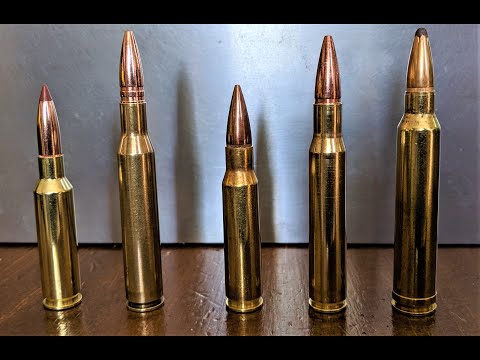
The right mix of FMJ and JHP loads for practice and defense

For most shooters, the right mix of FMJ and JHP loads hinges on a strict 90/10 split by round count. Buy bulk FMJ ammunition for the vast majority of your range work, as its lower cost allows you to practice trigger control and recoil management without burning through your defensive budget. Reserve premium JHP loads strictly for zeroing your carry optic, validating magazine reliability, and firing a few cylinders of your carry load under stress. Do not run JHP for general drills; save that expense. Instead, cycle a small monthly batch of JHPs to confirm your firearm feeds them with the same springs and extractor you use daily. This keeps your defensive rounds fresh, verifies point-of-aim at distance, and ensures your muscle memory is built on the cheap stuff while your survival gear stays untouched.
Storing a Large Ammunition Purchase Without Ruining the Cartridges
When you buy bulk ammo, the primary threat to cartridge integrity is moisture and temperature cycling. Store your large purchase in sealed, military-style .50-caliber cans with desiccant packs, as stacking loose boxes directly on a concrete floor wicks humidity into the primers. Keep the cans in a climate-controlled closet or interior room, never an attic or garage where daily temperature swings cause condensation inside the packaging. Rotate your stock by lot date, using older cartridges first to prevent age-related powder breakdown. Avoid over-tightening the lid, which can warp the seal; instead, check gaskets annually. For long-term storage, add oxygen absorbers to the canettes, but never mix different calibers in one container—weight shifts can dent case mouths and crush bullet tips. Finally, label each can with the purchase date and lot number to track exposure time.
Temperature and humidity ranges that keep powder and primers stable
To keep bulk ammunition reliable, control both temperature and humidity within a narrow band. Maintain a steady temperature between 55°F and 75°F; avoid any swings above 90°F, which accelerate powder stabilizer breakdown. Humidity is the critical partner: target a relative humidity (RH) of 30% to 40%, using desiccant packs or a dehumidifier. Below 20% can dry primer compounds, while above 50% risks corrosion and moisture ingress. For long-term bulk ammunition stability, follow this sequence:
- Pre-condition the storage room to 65°F and 35% RH.
- Seal ammo in airtight cans with a moisture indicator.
- Monitor monthly with a digital hygrometer, adjusting only gradually.
Consistent, moderate conditions outperform any extreme.
Rotating your stock: using the oldest boxes first without breaking seals
When you buy bulk ammo, the cardboard boxes stack up fast, and that’s where the trap lies—the freshest cases sit on top while older ones get buried. Rotating your stock by using the oldest boxes first, without breaking seals, keeps your entire cache at peak condition because unopened factory packaging is your best defense against moisture and oxidation. Pull from the bottom or rear of your shelf, and only crack a case when its date is the earliest, so you’re never left with a decade-old mystery batch. You don’t need to inventory every round—just scribble the purchase month on each box with a marker and trust the sequence. This simple habit means your ammo rotates naturally, and the seals stay intact until the exact moment they’re needed.
Rotating your stock means always grabbing the oldest sealed boxes first, so every cartridge gets used before age can degrade it—without ever opening fresh packaging prematurely.
The Practical Upsides of Buying in Bulk for Frequent Shooters
For frequent shooters, buying bulk ammo delivers immediate practical advantages beyond simple cost-per-round savings. Bulk ammo reduces the frequency of range-day interruptions, ensuring you never run short mid-session and can maintain consistent practice volume without wasteful trips to retail stores. Bulk purchasing also standardizes your ammunition lot, which improves shot-to-shot consistency for zeroing optics or load development—critical when your rifle’s point of impact shifts between batches. Additionally, having a reserve stock means you can shoot spontaneously whenever time allows, without waiting for shipments or store restocks. Finally, the per-box price drop from bulk ammo lets you allocate saved funds toward more range time, targets, or gear upgrades, directly increasing your overall shooting efficiency and skill retention.
Never hitting a shortage at the range mid-session
Never hitting a shortage at the range mid-session is the most immediate payoff of buying bulk ammo, as it eliminates the frustrating walk back to the car for another box. With a large reserve on hand, you can structure practice around skill development rather than rationing rounds, which keeps your rhythm intact and your focus 6.5x57mm Mauser Ammo for Sale on mechanics. This is especially valuable for drills that require sustained volume, like malfunction clearance or transitions. A simple inventory rule—restock when you dip below your next planned session’s count—prevents the problem entirely. Uninterrupted range time directly translates to better muscle memory, since you never have to stop cold to hunt down a vendor or scramble for a spare box. Even a short pause can break your shooting tempo, so the cost of a shortage is rarely just time. To avoid it consistently: check your ammo can before leaving, set a minimum reserve threshold, and always bring double your estimated round count.
Reducing trips to the store and simplifying your reloading supply chain
Buying bulk ammo components directly shrinks your logistic footprint. By consolidating primers, powder, and projectiles into fewer, larger shipments, you eliminate the weekly recon trips where shelves are often picked over. This forces disciplined inventory management: you track consumption against a fixed stockpile, prompting reloads only when a specific threshold breaks. Consequently, your supply chain becomes a predictable loop—order once, process for months, reorder. Bulk purchasing streamlines component turnover by reducing delivery frequency and the risk of mid-project shortages. The sequence is simple:
- Calculate monthly round output.
- Order a six-month supply of each component.
- Rotate stock by manufacturing date.
This removes the variable of store availability, ensuring your bench—not the retailer’s schedule—dictates production pace. The reloading cadence stabilizes, saving both fuel and decision fatigue.
Common Mistakes When Ordering Large Quantities of Cartridges Online
When ordering bulk ammo, one frequent error is ignoring case lot pricing tiers—buying just under a discount threshold costs you significantly per round. Another common mistake when ordering large quantities of cartridges online is failing to verify the actual bullet weight and velocity match your firearm’s twist rate, leading to poor accuracy across a thousand rounds. Do not assume all crates are sealed; many vendors repack partial boxes, so check for consistent headstamps and lot numbers upon delivery. Also, .32 Win Special Ammo for Sale miscalculating shipping weight for heavy cases often results in surprise freight fees that erase savings. Finally, never order based solely on price per round without factoring in the cost of ammo cans or moisture-control packs, especially if you plan long-term storage.
Overlooking the difference between brass, steel, and aluminum casings
Treating all cases as interchangeable is a costly error in bulk orders. Brass resists corrosion, handles high pressure, and is reloadable, but it is heavier and pricier. Steel, often polymer-coated, is cheaper and magnetic, yet it expands more in the chamber, leading to harder extraction and accelerated wear on your extractor. Aluminum is the lightest and most affordable, but it cannot be reloaded and is prone to dents during rough handling or storage—dented rounds can cause feeding failures. In a high-volume purchase, these mechanical differences directly affect your firearm’s longevity, malfunction rate, and per-round cost over years of use. Selecting a single case type without verifying your gun’s compatibility—especially for steel-cased ammo in tight chambers—can turn a savings into a repair bill.
Overlooking brass, steel, and aluminum casing differences in bulk ammo leads to extraction problems, increased wear, and wasted rounds—always match case material to your firearm’s tolerance and your reloading needs.
Ignoring the shipping weight and its impact on delivery costs
When ordering bulk ammo, ignoring the shipping weight is a costly oversight that directly inflates your final price per round. Ammo is heavy, and carriers charge by dimensional weight or actual pounds, so a “deal” on 5,000 cartridges can vanish under surprise freight fees. Calculating total landed cost before checkout is non-negotiable. A single pallet of 9mm can easily exceed 300 pounds, pushing your order into a higher freight bracket that doubles the original quote. Always compare per-pound rates across distributors and ask about residential delivery surcharges, which hit heavy packages especially hard.
- Convert case counts to estimated pounds using manufacturer specs before comparing prices.
- Request a freight quote with your exact ZIP code—clicks don’t equal final delivery fees.
- Factor in liftgate charges if you lack a loading dock; overweight pallets often require them.
- Split large orders into two lighter shipments if the per-package weight threshold drops your total shipping cost.